
Will Your Insurance Cover a Restaurant Fire? The Paper Trail Atlantic Canadian Inspectors Look For

Updated: Jun 21
If a grease fire breaks out in your commercial kitchen, holding an active policy does not automatically guarantee a payout. Whether your property insurance covers the structural damage and lost business income depends almost entirely on one factor: your ability to produce a verifiable, code-compliant paper trail at the time of the incident. Insurance underwriters across Nova Scotia, New Brunswick, and Prince Edward Island require strict, documented adherence to national fire codes before approving a claim.
In the high-pressure environment of the Atlantic Canadian hospitality sector, establishing a thorough risk management strategy must go beyond daily kitchen workflows. When an emergency occurs, an insurance provider does not simply take your word that your ventilation system was clean. They launch a rigorous forensic review of your administrative records.
This guide outlines the exact documentation required to secure your coverage, walks through the step-by-step process of a post-fire insurance audit, and provides a clear framework for building a defensible compliance archive that satisfies adjusters and fire marshals alike.

The Adjuster’s Playbook: Inside a Post-Fire Investigation
To understand why documentation takes precedence over verbal assurances, it helps to look at how an insurance company acts immediately following a commercial property fire. When a claim is filed, the insurer dispatches a specialized forensic engineer alongside an independent claims adjuster. Their primary objective is to isolate the point of origin and evaluate whether the policyholder complied with the operational safeguards mandated in the insurance contract.
During an investigation, the adjuster will execute a structured, step-by-step review:
Isolating the Point of Origin: Investigators examine the physical burn patterns along the line and inside the ventilation hood throat to determine if the fire spread through the ductwork due to unaddressed grease reserves.
Auditing the Physical Seals: The team evaluates physical components, looking for indicators of poor maintenance such as structural roof degradation from fan grease overflows or hidden tinderboxes caused by missing ductwork access cleanouts.
Reviewing Administrative Logs: Investigators demand the immediate release of all third-party service invoices, compliance certificates, and maintenance manifests.
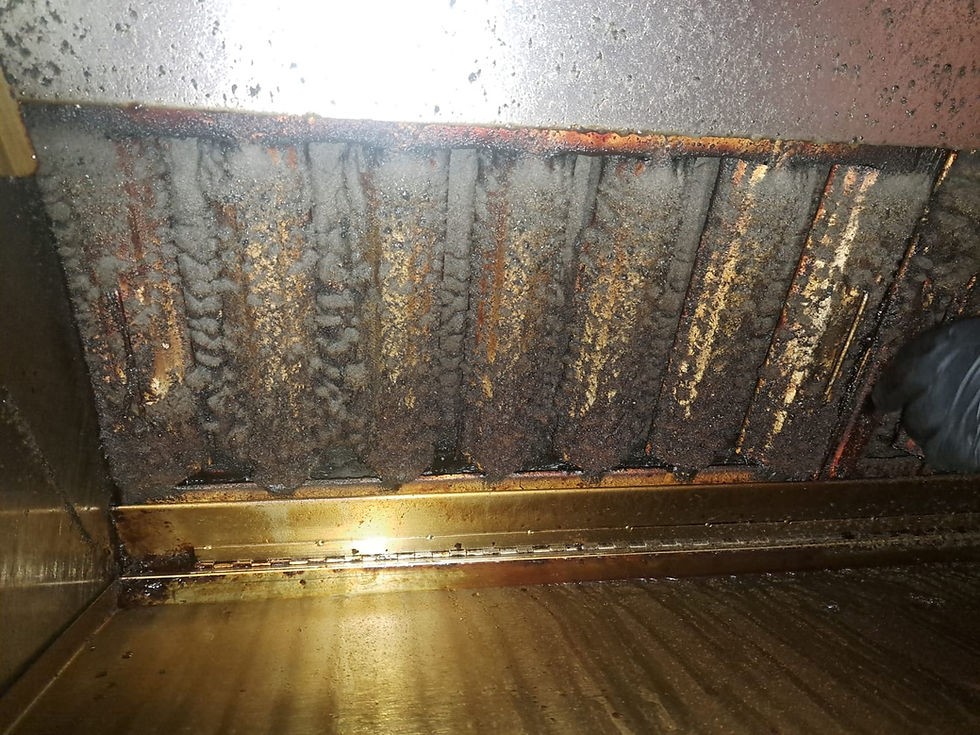
If the forensic team finds that the extraction loop was heavily impacted with carbonized grease glaze, they will focus heavily on your paperwork. Under standard commercial property conditions, insurers may deny coverage if a policyholder fails to provide third-party proof of regular, code-compliant maintenance. If your documentation is missing, incomplete, or signed by an uncertified provider, the insurer can attribute the damage to owner negligence, which can leave your business entirely exposed to the costs of property reconstruction and third-party liabilities.
The Compliance Checklist: The 5 Elements of a Valid Paper Trail
A pile of standard cleaning invoices or handwritten staff checklists is insufficient during a formal insurance audit. Adjusters look for a specific set of formalized documents that verify your system meets National Fire Protection Association standards.
A defensible compliance archive must include these five core elements:
1. Official Certificate of Performance
Following every professional cleaning cycle, your provider must issue a formal certificate stating that the entire exhaust tract—from the hood throat to the rooftop fan blades—has been successfully descaled down to bare metal. This document must explicitly cite compliance with current national fire codes.
2. Affixed On-Site Compliance Tags
Technicians must install a visible, tamper-evident compliance label directly onto the frame of the exhaust hood. This tag acts as an immediate field indicator for visiting fire authorities and insurance inspectors, displaying the exact date of service, the company's registration info, and the next scheduled maintenance interval.

3. Time-Stamped Photographic Evidence
A verifiable report must include high-resolution, time-stamped photographs illustrating the interior condition of the entire system before and after treatment. These visual records provide undeniable proof that hidden vertical transitions, horizontal runs, and rooftop housings were fully cleared rather than superficially scraped.
4. Verified Technician Credentials
Your service manifests must show the names and specific credential numbers of the responding technicians. Insurers routinely verify whether the individuals executing the maintenance hold valid certifications from recognized industry training authorities.
5. Structured Service Frequency Logs
Your records must show a consistent, uninterrupted history of service that aligns with the cleaning intervals required for your kitchen's cooking volume. Any unexecuted service intervals or unexplained gaps in your maintenance schedule can weaken your position during a claim audit.
Common Documentation Gaps That Can Compromise a Claim
Many hospitality operators do not discover flaws in their record-keeping until after an incident has occurred. Reviewing your current filing system can help you identify several common administrative gaps that risk managers routinely exploit to justify a claim denial.
The most frequent documentation failure involves utilizing uncertified, low-cost cleaning providers who do not issue detailed post-service digital reports. If your service provider only gives you a basic receipt without photographic confirmation of hidden duct interiors, you lack proof that the entire system was cleaned in accordance with national safety codes.
Another common administrative gap is relying entirely on internal staff cleaning logs. While daily surface wiping of baffles by your kitchen team is an important part of basic kitchen care, internal logs cannot replace third-party certifications. Staff logs do not verify specialized bare-metal steam extraction, and adjusters rarely accept them as valid proof of professional fire-code compliance.
Finally, allowing compliance tags to lapse or fail to match your actual service history can raise red flags during an inspection. If a fire marshal or insurance agent notes an expired date on your hood frame, they may open an immediate review into your operational records, leaving your business vulnerable to unexpected compliance penalties or sudden operational restrictions.
Building a Defensible Archive: Best Practices for Kitchen Managers
Protecting your facility’s financial standing requires a proactive approach to document management. Rather than treating compliance paperwork as an afterthought, kitchen managers should run a secure digital compliance archive that can be accessed instantly during a surprise inspection or an underwriting audit.
Maintain Centralized Digital Records
Scan all physical performance certificates, technician credentials, and photographic reports into a secure, cloud-based directory. This ensures that even if a fire damages your physical office space, your full administrative paper trail remains completely safe and downloadable from any device.
Align Schedules with System Volume
Work closely with an experienced provider to match your service intervals directly to your kitchen's actual cooking demands. High-volume operations, such as 24-hour diners or high-frequency charbroiling lines, require significantly shorter service intervals compared to low-volume or seasonal facilities.
Perform Routine Record Audits
Review your compliance logs every quarter to ensure your provider has uploaded all necessary time-stamped photos and updated tags. Catching an omitted report or an unvouched service window early allows you to correct your records long before an adjuster ever needs to audit your property.
Night Vision Clean provides structured compliance management packages tailored to the strict insurance requirements of the Atlantic Canadian hospitality market. Our mobile teams handle the execution of bare-metal descaling while automating your record keeping. Following every service cycle, we deliver a detailed digital manifest complete with time-stamped visual records and verified technician signatures, ensuring your business holds an ironclad administrative shield through every operational season.
Frequently Asked Questions
How long should I keep my commercial kitchen exhaust cleaning records?
It is highly recommended to maintain a minimum of three to five years of consecutive, uninterrupted kitchen exhaust cleaning records. Insurance companies look for a pattern of consistent maintenance during a forensic audit, and any unexplained gaps can compromise your coverage.
What is the difference between a compliance tag and a certificate of performance?
A compliance tag is a quick-reference physical label applied on-site to your hood frame for visiting fire marshals. A certificate of performance is a comprehensive legal document that details the full scope of the cleaning, includes before-and-after photos, lists technician credentials, and serves as your formal proof during an insurance audit.
Can I use my own staff's kitchen cleaning logs as proof for insurance?
No. While internal staff logs are useful for documenting daily hood surface maintenance, they are not accepted by insurance adjusters as proof of fire-code compliance. Insurers require official verification of full bare-metal steam descaling executed by a certified third-party provider.
How do I verify if my cleaning schedule matches required fire codes?
National codes set cleaning frequencies based on your specific cooking volume and appliance type rather than arbitrary timelines. A certified professional can review your menu, line equipment, and operational hours to establish a compliant monthly, quarterly, or semi-annual schedule.
Do not leave your business open to sudden claim denials or devastating compliance liabilities during an operational emergency. Contact the certified risk management team at Night Vision Clean today to protect your facility with a comprehensive compliance documentation audit.


Comments