
What Most New Brunswick Commercial Leases Get Wrong About Kitchen Exhaust Maintenance Obligations

Signing a commercial lease for a restaurant is often one of the biggest commitments a business owner makes. Lease negotiations typically focus on rental rates, tenant improvements, operating costs, insurance requirements, and lease duration. Yet one operational responsibility is frequently overlooked until an inspection, maintenance issue, or equipment problem forces the conversation: Who is responsible for maintaining the commercial kitchen exhaust system?
The answer is not always as straightforward as restaurant owners expect.
Many commercial leases contain broad maintenance clauses requiring tenants to maintain the premises in good operating condition. Others assign responsibility for building systems to landlords while placing restaurant-specific equipment under the tenant's care.
Unfortunately, kitchen exhaust systems often sit somewhere between these categories.
Because every lease is different, assumptions can create unnecessary disputes between landlords and tenants. Rather than relying on verbal understandings or industry assumptions, both parties benefit from defining responsibilities before the restaurant begins operating.
This article explores the maintenance issues that commercial leases commonly overlook, the questions restaurant operators should ask before signing, and why clear documentation is just as important as professional cleaning.
Why Kitchen Exhaust Systems Create Unique Lease Challenges
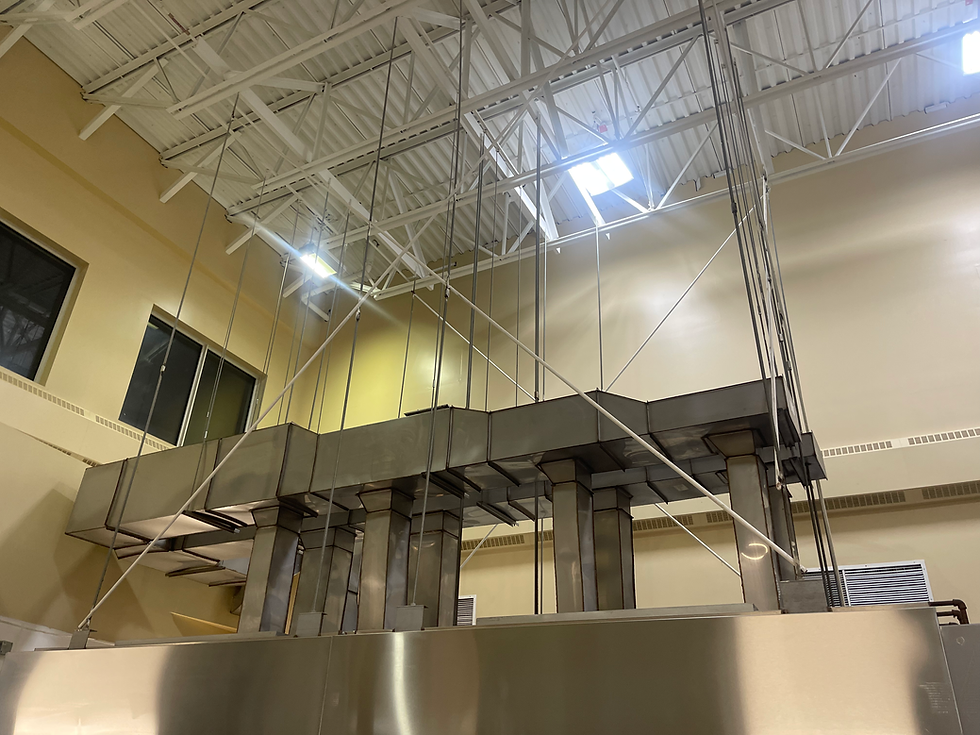
Unlike many building systems, a commercial kitchen exhaust system serves a single tenant while also becoming part of the building's overall infrastructure.
A typical system may include:
Kitchen exhaust hood
Grease filters
Horizontal ductwork
Vertical exhaust ducts
Rooftop exhaust fan
Access panels
Fan housing
Grease containment components
Connections to fire suppression equipment
Some components are located entirely inside the leased premises, while others extend into ceilings, service shafts, or onto the building's roof.
This physical arrangement often creates uncertainty when determining maintenance responsibilities.
For example:
Does the tenant maintain only the hood?
Who cleans rooftop fan assemblies?
Who repairs roof penetrations around exhaust equipment?
Who is responsible if duct access requires work outside the leased premises?
Should maintenance documentation be shared with the property owner?
These questions are rarely answered in detail within standard commercial lease templates.
Quick brief about Kitchen Exhaust Maintenance New Brunswick
Quick brief about Kitchen Exhaust Maintenance New Brunswick: Kitchen exhaust maintenance in New Brunswick is more than a compliance requirement—it’s a critical part of fire safety and daily restaurant operations. Coastal humidity and year‑round cooking activity accelerate grease buildup, making regular inspections and professional cleaning essential. A qualified contractor doesn’t just remove visible grease; they document service, identify hidden issues, and help restaurants stay inspection‑ready. For owners across New Brunswick, investing in consistent kitchen exhaust maintenance reduces risk, improves ventilation efficiency, and supports smoother operations. Choosing the right vendor ensures long‑term value, safety, and peace of mind for every commercial kitchen."
Common Lease Mistake #1: Assuming "General Maintenance" Covers Everything
Many restaurant owners read a clause requiring tenants to "maintain the premises" and assume that all kitchen exhaust maintenance automatically falls under their responsibility.
Likewise, some landlords assume that because the exhaust system serves only one tenant, every component becomes the tenant's obligation.
In practice, the answer depends on the lease language, the building configuration, and applicable legal obligations.
Rather than relying on assumptions, restaurant operators should identify how the lease defines:
Tenant equipment
Building systems
Mechanical equipment
Structural components
Rooftop equipment
Shared infrastructure
If these definitions are unclear, clarification before signing the lease can prevent future disagreements.
Importantly, this article does not provide legal advice. Commercial lease interpretation depends on the specific agreement and applicable laws. Restaurant owners should consult qualified legal professionals when reviewing lease terms.
Why Vague Language Creates Operational Problems
Maintenance questions rarely arise when everything is working properly.
They appear when:
A cleaning contractor identifies an issue.
A rooftop component requires service.
Documentation is requested during an inspection.
A repair requires roof access.
Ownership changes.
A lease is renewed.
Multiple contractors become involved.
Without clearly assigned responsibilities, maintenance can be delayed while both parties determine who should authorize or arrange the work.
For restaurants operating on tight schedules, delays can affect routine maintenance planning and create unnecessary operational disruption.
Common Lease Mistake #2: Treating Cleaning and Repairs as the Same Responsibility
One of the most common misunderstandings involves the difference between routine cleaning and equipment repair.
These are not necessarily the same service.
Routine maintenance may include:
Professional exhaust system cleaning
Hood cleaning
Filter cleaning
Grease removal
Maintenance documentation
Repairs may involve:
Fan motors
Bearings
Electrical components
Roof flashing
Duct modifications
Mechanical failures
Structural repairs
A lease may assign these responsibilities differently.
For that reason, restaurant owners should ask whether the lease distinguishes between:
Preventive maintenance
Routine cleaning
Corrective maintenance
Mechanical repairs
Capital replacement
Understanding these distinctions early helps avoid confusion later.
Ask These Questions Before Signing a Restaurant Lease
Before signing a commercial lease, restaurant operators should discuss questions such as:
Who arranges routine kitchen exhaust cleaning?
Who selects the cleaning contractor?
Who pays for scheduled maintenance?
Who receives maintenance reports?
Who authorizes repairs if issues are discovered?
Is rooftop access controlled by the landlord?
Are maintenance records required as part of the lease?
Even when responsibilities ultimately belong to one party, documenting expectations benefits everyone involved.
Common Lease Mistake #3: Forgetting About Documentation
Maintenance documentation often receives less attention than the cleaning itself.
Yet documentation creates continuity between:
Restaurant operators
Property managers
Cleaning contractors
Future tenants
Building owners
Service providers
A professional maintenance record may include:
Service dates
Areas cleaned
Technician observations
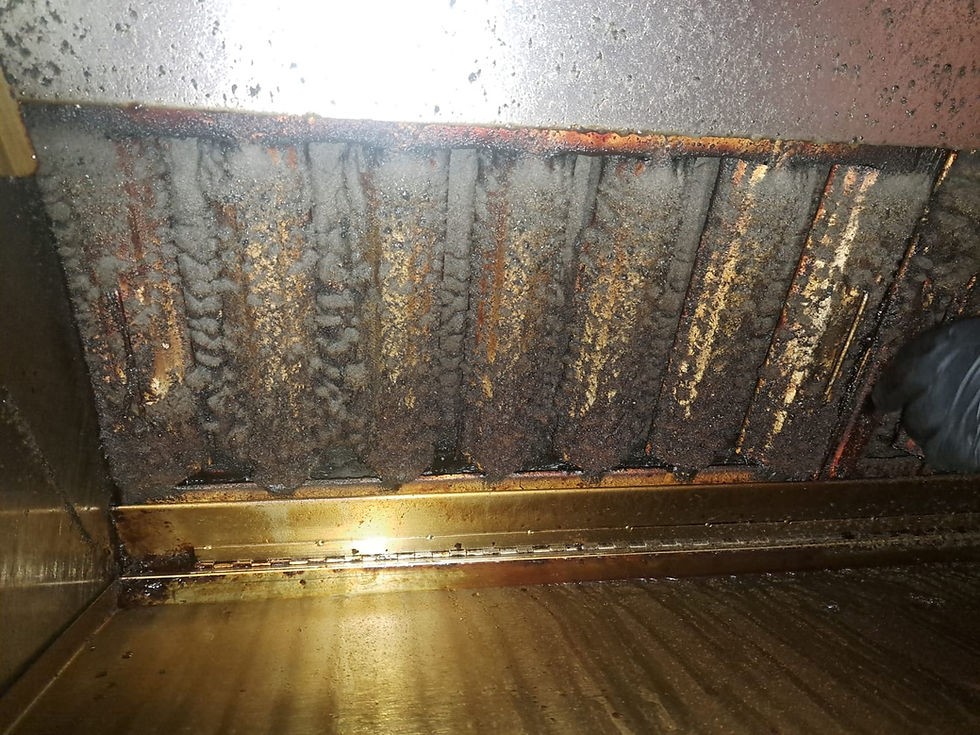
Before-and-after photographs
Maintenance recommendations
Follow-up items
If ownership changes or questions arise later, organized records help everyone understand what work has already been completed.
This is one reason many experienced property managers encourage consistent documentation throughout the life of the lease rather than waiting until renewal discussions begin.
When Maintenance Responsibilities Become Blurred
The most expensive maintenance dispute is often the one that could have been prevented with a single paragraph in the lease.
Commercial kitchen exhaust systems are unlike furniture or small appliances. They extend beyond the kitchen ceiling, pass through building infrastructure, and frequently terminate on the roof. Because multiple parties have an interest in different parts of the system, assumptions can quickly lead to disagreements.
A practical way to avoid this is to identify responsibilities before operations begin and document them clearly.
The table below illustrates how responsibilities are commonly assigned in many commercial lease arrangements. These are examples only—actual obligations always depend on the specific lease agreement and applicable laws.
Typical Responsibility Breakdown
Maintenance Item | Common Tenant Responsibility | Common Landlord Responsibility | Notes |
Interior hood cleaning | ✓ | Usually forms part of restaurant operations. | |
Grease filter cleaning or replacement | ✓ | Often completed as part of routine kitchen maintenance. | |
Scheduled exhaust system cleaning | ✓ | Frequently assigned to the restaurant operator, but verify the lease. | |
Rooftop access authorization | ✓ | Building owners often control roof access for safety and liability reasons. | |
Roof membrane surrounding exhaust penetrations | ✓ | Structural roof components are commonly maintained by the landlord unless otherwise stated. | |
Exhaust fan mechanical repairs | Depends on lease | Depends on lease | Clarify ownership of rooftop mechanical equipment before signing. |
Structural duct modifications | ✓ | Often considered part of the building infrastructure, but verify lease language. | |
Cleaning documentation retention | ✓ | Shared | Both parties may benefit from maintaining service records. |
This table should not replace legal advice. Instead, it highlights why lease language should be reviewed carefully before operational responsibilities are assumed.
Maintenance Is Easier When Everyone Knows Their Role
Successful commercial properties typically involve three groups working together:
The restaurant operator
The property owner or property manager
Qualified maintenance contractors
Each group has different responsibilities, but all benefit from clear communication.
For example:
A restaurant schedules its routine kitchen exhaust cleaning. During the service, technicians observe that a rooftop fan mounting bracket appears damaged. Rather than attempting repairs outside the agreed scope, they document the observation with photographs and include it in the service report.
The restaurant manager forwards the report to the property manager because the rooftop structure falls under the landlord's maintenance responsibilities as defined in the lease.
Instead of debating responsibility weeks later, everyone has the same information at the same time.
That is how professional documentation reduces uncertainty.
Five Lease Situations That Frequently Create Confusion
Although every building is different, these situations arise regularly in commercial food-service properties.
1. Roof Access Requires Landlord Approval
Many exhaust systems terminate on the building roof.
Even if the tenant is responsible for cleaning, contractors may require permission or coordination with the property owner before accessing rooftop equipment.
Without clear procedures, scheduled maintenance can be delayed.
2. The Lease Mentions HVAC—but Not Kitchen Exhaust Systems
Some commercial leases describe general heating, ventilation, and air-conditioning systems but never specifically reference commercial kitchen exhaust systems.
Restaurant operators should avoid assuming that HVAC language automatically includes kitchen exhaust equipment.
Request clarification whenever terminology is ambiguous.
3. Ownership Changes During the Lease
Commercial buildings change hands.
Restaurants are sold.
Property managers are replaced.
Without organized maintenance records, incoming owners may have little understanding of previous service history.
Consistent documentation helps preserve continuity regardless of who occupies the building or manages the property.
4. Multiple Contractors Work on the Same System
A commercial kitchen may involve several specialized contractors throughout the year.
Examples include:
Kitchen exhaust cleaning professionals
Fire suppression service providers
Fire extinguisher inspectors
HVAC contractors
Roofing contractors
Mechanical service technicians
Without communication between service providers, duplicate work or conflicting schedules can occur.
Restaurant owners benefit when maintenance records are centralized and easily accessible.
5. Emergency Repairs Blur Existing Responsibilities
Unexpected equipment failures often expose weaknesses in lease language.
Questions quickly arise:
Who authorizes emergency work?
Who contacts the contractor?
Who approves invoices?
Who receives inspection reports?
Who verifies the repair has been completed?
Having these procedures discussed before an emergency reduces stress during time-sensitive situations.
Documentation Is Just as Valuable as the Cleaning
Professional cleaning removes grease.
Professional documentation preserves knowledge.
Every maintenance visit creates information that may assist future planning.
Examples include:
Date of service
Areas accessed
Areas cleaned
Technician observations
Photographs
Maintenance recommendations
Follow-up actions
Over several years, these reports become a maintenance history rather than a collection of
invoices.
This historical record benefits:
Restaurant owners
Property managers
Building owners
Insurance representatives
Future maintenance contractors
For readers interested in this topic, see our related article:
Build Communication Into the Lease—Not Just the Maintenance Plan
One practical improvement many restaurant operators overlook is establishing a communication process.
Instead of simply assigning responsibility, leases and operating procedures can identify:
Who schedules routine maintenance.
Who receives service reports.
Who approves rooftop access.
Who communicates with contractors.
Who stores maintenance documentation.
Who follows up on recommended repairs.
When these responsibilities are clearly assigned, maintenance becomes far more predictable.
For multi-tenant commercial buildings, this level of organization also helps property managers coordinate service providers more efficiently while reducing unnecessary interruptions for restaurant operators.
A Professional Contractor Should Support the Process
A qualified commercial kitchen exhaust cleaning company should do more than complete the work and leave.
Professional contractors should be able to:
Clearly explain the scope of service.
Coordinate with restaurant management.
Respect building access procedures.
Provide organized documentation.
Communicate maintenance observations.
Recommend appropriate follow-up when issues are identified.
Their role is not to interpret lease agreements or provide legal advice. Instead, they contribute reliable maintenance information that helps both landlords and tenants make informed decisions.
Frequently Asked Questions
1. Should a commercial lease specifically mention kitchen exhaust maintenance?
Yes. While many commercial leases contain general maintenance provisions, it is beneficial for restaurant operators and landlords to identify responsibility for commercial kitchen exhaust systems specifically. Clear language helps reduce misunderstandings regarding routine cleaning, documentation, access, and repair responsibilities.
2. Who should keep records of kitchen exhaust cleaning?
Ideally, both the restaurant operator and the property owner or property manager should retain maintenance documentation. Keeping duplicate records creates continuity if management changes, ownership transfers, or future maintenance questions arise.
3. If my landlord owns the building, can I assume they schedule kitchen exhaust cleaning?
Not necessarily. Ownership of the building does not automatically determine responsibility for kitchen exhaust maintenance. Commercial leases often assign operational maintenance obligations differently. Review the lease carefully and clarify responsibilities before assuming another party is arranging service.
4. Can a professional cleaning contractor help interpret my lease?
A qualified cleaning contractor can explain the maintenance services they provide and identify observations within the exhaust system. However, they should not interpret legal agreements. Questions regarding lease obligations should be reviewed with the property owner, property manager, or legal advisor.
Conclusion
A commercial kitchen exhaust system doesn't distinguish between landlord responsibilities and tenant responsibilities—it simply requires consistent maintenance to operate effectively.
Many lease disputes don't arise because someone refused to maintain the system. They arise because nobody clearly understood who was responsible in the first place.
Restaurant operators, landlords, and property managers all benefit when maintenance expectations are established before the first meal is served. Clear lease language, organized documentation, routine communication, and professional cleaning work together to create a maintenance program that supports safer operations and fewer surprises throughout the lease term.
Rather than waiting until an inspection, equipment issue, or maintenance question forces the conversation, use the beginning of the lease relationship to define responsibilities, organize documentation, and establish a proactive maintenance schedule.
That small investment in planning can make years of commercial kitchen operations significantly more organized.
Planning a New Restaurant or Reviewing an Existing Lease?
Whether you're opening a new restaurant in Moncton, taking over an existing commercial kitchen, or reviewing maintenance responsibilities as part of a lease renewal, Night Vision Clean can help you build a structured maintenance program supported by professional documentation and dependable service.
Our experienced team serves commercial kitchens throughout New Brunswick, Nova Scotia, and Prince Edward Island, helping restaurant owners, facility managers, and property managers maintain cleaner kitchen exhaust systems and organized maintenance records.
📋 Schedule a Kitchen Exhaust Assessment
📞 Call Us: +1 (902) 478-1846
Let's help you establish a maintenance program that supports your operations from the first day of your lease—not just the first inspection.
Schedule a Kitchen Exhaust Assessment



Comments