
Ghost Kitchens and Dark Restaurants in Atlantic Canada: The Compliance Gaps That Are Slipping Through the Cracks

The absence of customers does not reduce the importance of a commercial kitchen.
A delivery-only restaurant can produce hundreds of meals each day without a single guest walking through the front door. From the outside, it may look like a warehouse unit, a converted retail space, or a shared commissary. Inside, however, it often contains the same fryers, grills, ranges, ovens, and exhaust systems found in a traditional restaurant.
That distinction matters because commercial kitchen safety requirements are generally tied to how food is prepared, not whether customers dine on-site.
As ghost kitchens continue expanding across Atlantic Canada—including facilities supporting food delivery platforms and multi-brand restaurant operations—many operators are discovering that removing the dining room does not eliminate responsibilities related to kitchen exhaust maintenance, fire suppression systems, documentation, or routine inspections.
This article examines the operational compliance gaps that frequently affect delivery-only food businesses and explains how a structured maintenance program can help operators reduce unnecessary risks.
Article Log (Current Series)
Article 1
What a Nova Scotia Fire Marshal Actually Looks for During a Commercial Kitchen Inspection — and How to Pass Without Panic
Summary:
Focused on how commercial kitchen inspections are approached, including documentation, housekeeping, suppression systems, and operational readiness.
Primary Keyword:
Commercial Kitchen Inspection Nova Scotia
FAQs Used:
What happens during a kitchen inspection?
Can inspections occur without notice?
How should restaurants prepare?
How often are inspections conducted?
Article 2
The Hidden Cost of a Denied Insurance Claim
Summary:
Explored why maintenance documentation can become valuable after property damage, emphasizing recordkeeping rather than cleaning procedures.
Primary Keyword:
Kitchen Exhaust Cleaning Documentation
FAQs Used:
What documentation should be retained?
How long should records be kept?
Do insurers request maintenance records?
What should service reports include?
Article 3
What Most New Brunswick Commercial Leases Get Wrong About Kitchen Exhaust Maintenance Obligations
Summary:
Examined landlord-tenant maintenance responsibilities and how lease language can influence operational planning.
Primary Keyword:
Kitchen Exhaust Maintenance New Brunswick
FAQs Used:
Should leases mention exhaust maintenance?
Who stores maintenance records?
Who schedules cleaning?
Can contractors interpret leases?
What Makes Ghost Kitchen Compliance Atlantic Canada Different?
Ghost kitchens change the way restaurants operate—but they do not fundamentally change the physical realities of commercial cooking.
Food is still exposed to heat.
Cooking oils still vaporize.
Grease-laden vapors still travel through ductwork.
Exhaust fans still remove heat and smoke.
Fire suppression systems still protect cooking equipment.
The major difference lies in the business model rather than the equipment.
Instead of serving guests inside a dining room, ghost kitchens focus almost entirely on delivery and takeout. One facility may house several restaurant brands operating simultaneously from the same cooking line, while another may prepare meals exclusively for third-party delivery services.
Because customers rarely see these kitchens, operators often invest heavily in online ordering systems, branding, and delivery logistics. Behind the scenes, however, routine maintenance can become easier to postpone—especially during periods of rapid growth.
That is where compliance gaps begin to emerge.
Compliance Is Based on Operations, Not Visibility
One misconception surrounding ghost kitchens is that they operate under a lighter regulatory framework because they have fewer public-facing spaces.
In reality, many safety requirements are driven by the cooking process itself.
Whether meals are served at a dining table or delivered to a customer's doorstep, commercial cooking equipment can still produce:
Grease-laden vapours
Heat accumulation
Smoke
Airborne contaminants
Fire hazards associated with cooking oils
These operational conditions are why kitchen exhaust systems, fire suppression equipment, and routine maintenance remain important components of commercial kitchen management.
Operators should always verify the specific requirements that apply within their municipality or province, as regulations and inspection practices may vary.

Shared Kitchens Create Shared Responsibilities
One of the biggest operational differences between traditional restaurants and ghost kitchens is that multiple businesses may occupy the same facility.
A commissary kitchen might include:
A burger concept
A seafood brand
A bakery
A meal-preparation company
A catering operation
Each business may have its own staff, schedules, menus, and delivery platforms while relying on shared infrastructure.
This creates practical questions that should be addressed early:
Who schedules exhaust cleaning?
Who verifies maintenance has been completed?
Who stores inspection reports?
Who coordinates contractor access?
Who approves recommended repairs?
How are costs allocated among kitchen users?
Without clear operating procedures, routine maintenance responsibilities can become fragmented.
Unlike a single-tenant restaurant, shared facilities require communication between multiple stakeholders.
More Operating Hours Can Mean More Grease
Ghost kitchens often maximize equipment utilization.
Instead of preparing lunch and dinner for one restaurant, the kitchen may support several brands from early morning until late at night.
Longer operating hours can contribute to:
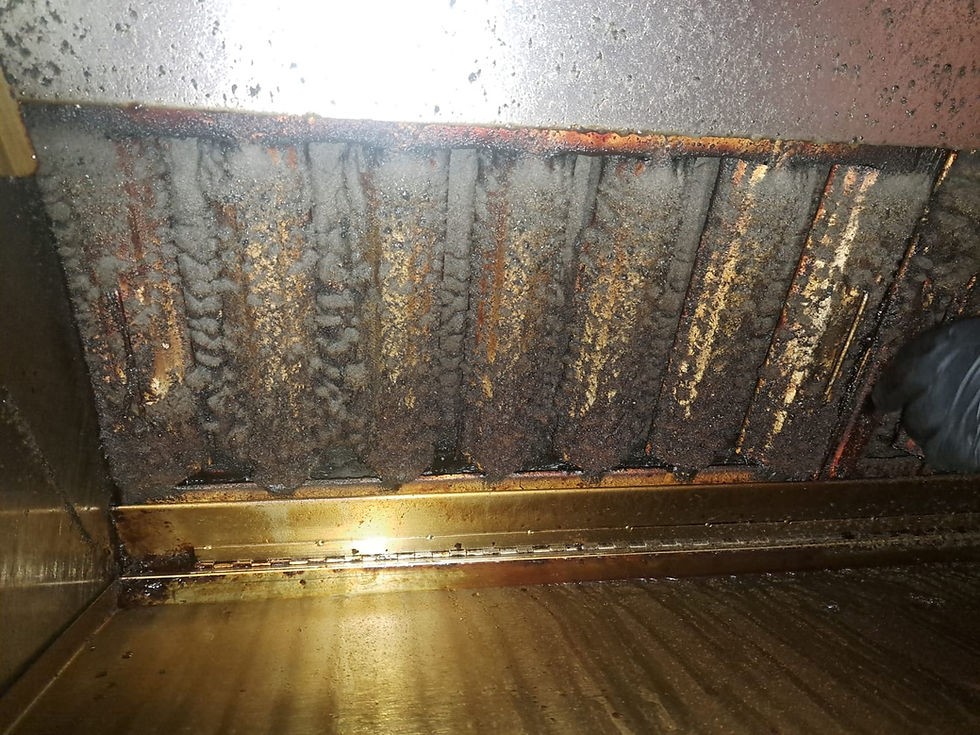
Increased grease accumulation
More frequent filter maintenance
Greater wear on exhaust components
Higher demand on ventilation systems
Cleaning schedules should reflect actual kitchen usage rather than assumptions based on business type.
A delivery-only kitchen operating around the clock may require a different maintenance strategy than a restaurant with shorter service periods.
The Growth of Delivery Platforms Has Changed Operational Priorities
The rapid expansion of food delivery has transformed how many restaurants operate. New operators often prioritize online ordering systems, delivery platform integrations, menu optimization, and production efficiency. While these priorities make sense from a business perspective, they can unintentionally push facility maintenance further down the list.
For ghost kitchens, customer feedback rarely highlights greasy ceilings, dusty exhaust diffusers, or back‑of‑house conditions. Because the kitchen is hidden from public view, maintenance issues may go unnoticed until they affect inspections, operations, or equipment performance.
This is where Ghost Kitchen Compliance Atlantic Canada becomes critical. Inspectors, insurers, and landlords still expect kitchens to meet safety and cleanliness standards. A clean, well‑maintained kitchen remains essential for professional operations—whether meals are served in a dining room or delivered through an app.
Documentation Becomes Even More Important in Shared Facilities
In a single-location restaurant, documenting maintenance is usually straightforward. One business owner schedules the work, receives the service report, and files the records.
Ghost kitchens and commissary facilities can be much more complex.
Several businesses may operate under one roof while sharing:
Kitchen exhaust hoods
Duct systems
Exhaust fans
Fire suppression equipment
Grease management systems
Utility infrastructure
When maintenance responsibilities are divided among multiple operators, documentation can quickly become inconsistent.
Questions commonly arise, including:
Which business requested the service?
Does the report cover the entire system or only one cooking line?
Who retains the inspection documentation?
Were all operators informed of the scheduled cleaning?
Were recommended repairs communicated to everyone using the facility?
Without a clear documentation process, important maintenance records may become fragmented across several businesses.
This is why many professionally managed shared kitchens establish a centralized maintenance file that includes:
Service reports
Cleaning schedules
Contractor certificates
Before-and-after photographs
Maintenance recommendations
Follow-up repair documentation
A centralized system helps everyone work from the same information and simplifies future inspections or operational reviews.
Common Compliance Gaps Found in Ghost Kitchen Operations
Ghost kitchens often introduce operational complexity rather than reducing it. While every facility is different, several maintenance issues appear more frequently when multiple businesses share equipment or when rapid growth outpaces operational planning.
1. Unclear Maintenance Ownership
The most common issue isn't neglected cleaning—it's uncertainty about who is responsible for arranging it.
When responsibilities are assumed rather than assigned, maintenance can easily fall behind schedule.
2. Shared Equipment Without Shared Procedures
Multiple businesses may cook beneath the same hood while operating independently.
Without written procedures covering maintenance scheduling, reporting, and contractor access, communication gaps can develop.
3. Different Cooking Styles, One Exhaust System
Not every restaurant produces the same volume or type of grease.
For example:
Deep-frying operations
Seafood restaurants
Charbroiler concepts
High-volume Asian cooking
Fast-casual kitchens
may all generate different levels of grease accumulation.
When several brands share one exhaust system, cleaning schedules should consider overall kitchen activity rather than any single operator's menu.
4. Maintenance Reports Stored in Different Locations
One tenant may keep paper files.
Another stores reports in email.
A third relies on the cleaning contractor to maintain records.
During an inspection or operational review, assembling complete documentation can become unnecessarily difficult.
5. Equipment Changes Without Maintenance Review
Ghost kitchens evolve rapidly.
New fryers are added.
Cooking lines expand.
Menus change.
Production hours increase.
Whenever cooking equipment changes significantly, operators should evaluate whether existing maintenance schedules remain appropriate for the new operating conditions.
Traditional Restaurants vs. Ghost Kitchens
Operational Area | Traditional Restaurant | Ghost Kitchen / Shared Facility |
Customer Dining Area | Yes | No |
Multiple Restaurant Brands | Usually No | Often Yes |
Shared Exhaust Systems | Rare | Common |
Multiple Decision Makers | Limited | Frequently Several |
Centralized Documentation | Easier to Maintain | Requires Coordination |
Maintenance Scheduling | Single Operator | Shared Responsibility |
Operational Hours | Standard Meal Periods | Often Extended |
Facility Complexity | Moderate | Higher |
The table doesn't suggest that one model is safer than the other. Instead, it highlights why shared facilities often require stronger communication and clearer maintenance procedures.
Don't Overlook Areas Beyond the Exhaust Hood
When discussing commercial kitchen maintenance, exhaust hoods naturally receive significant attention. However, a comprehensive maintenance program also considers surrounding systems and surfaces that support safe operations.
Depending on the kitchen layout, operators may also review:
Grease filters
Accessible ductwork
Exhaust fan condition
Ceiling surfaces above cooking equipment
Wall surfaces near fryers and grills
Equipment casters and floor areas beneath heavy appliances
Utility connections where grease can accumulate
Make-up air components
Grease management systems
Floor drains and surrounding sanitation
Looking at the kitchen as an integrated system rather than a collection of separate components often leads to more consistent maintenance planning.
Why Facility Managers Play an Increasingly Important Role
As ghost kitchens become more common, facility managers often become the link between restaurant operators, landlords, contractors, and regulatory authorities.
Effective facility management may include:
Coordinating maintenance schedules
Maintaining centralized records
Communicating contractor access
Tracking recommended repairs
Monitoring recurring maintenance intervals
Supporting operational consistency across multiple tenants
Rather than responding only when problems occur, facility managers can help establish structured maintenance programs that reduce uncertainty and improve communication.
Best Practices Checklist for Ghost Kitchen Compliance Atlantic Canada
As ghost kitchens continue to expand throughout Atlantic Canada, operators who establish structured maintenance programs early are generally better positioned to support long-term operational consistency. While every facility is different, the following checklist can help identify areas worth reviewing.
Facility Management Checklist
☐ Clearly assign responsibility for kitchen exhaust cleaning.
☐ Establish written maintenance schedules.
☐ Keep digital and printed service reports together.
☐ Verify rooftop equipment remains accessible for scheduled maintenance.
☐ Review maintenance responsibilities whenever new cooking equipment is installed.
☐ Coordinate cleaning schedules if multiple restaurant brands share the same exhaust system.
☐ Ensure grease filters are cleaned or replaced according to operational needs.
☐ Maintain organized documentation of inspections and contractor recommendations.
☐ Periodically review the condition of accessible ductwork, fans, and surrounding kitchen surfaces.
☐ Communicate maintenance activities to all businesses operating within shared kitchen facilities.
Operators who regularly review these items often find it easier to coordinate maintenance, prepare for inspections, and maintain consistency as their businesses grow.
Frequently Asked Questions
1. Does a ghost kitchen require commercial kitchen exhaust cleaning?
If a ghost kitchen uses commercial cooking equipment that produces grease-laden vapours, maintenance requirements generally remain similar to those of other commercial kitchens. Operators should always verify applicable local codes and inspection requirements.
2. If several restaurant brands share one kitchen, who is responsible for maintenance?
Responsibility depends on the operating agreement, lease, or facility management structure. Shared kitchens benefit from clearly documented responsibilities and centralized maintenance records to avoid misunderstandings.
3. Should each restaurant brand keep copies of maintenance reports?
Yes. Even when one facility manager coordinates maintenance, it is good operational practice for each business to retain copies of relevant documentation for its own records.
4. Can expanding delivery operations affect maintenance scheduling?
Yes. Longer operating hours, additional cooking equipment, and increased food production may change how frequently certain maintenance activities should be reviewed. Maintenance schedules should reflect actual kitchen usage rather than assumptions based on business type.
Safety Summary
Ghost kitchens have changed the restaurant industry, but they have not changed the realities of commercial cooking.
Cooking equipment still produces heat, grease, and airborne contaminants. Exhaust systems still require routine maintenance. Documentation still matters. Communication between operators, landlords, facility managers, and contractors remains just as important as it is in a traditional restaurant.
The difference is that ghost kitchens often introduce additional layers of operational complexity. Multiple businesses may rely on the same infrastructure, maintenance responsibilities may be shared, and rapid business growth can sometimes outpace operational planning.
The most successful delivery-only facilities treat maintenance as part of everyday operations rather than something addressed only before an inspection. By establishing clear responsibilities, maintaining organized documentation, and scheduling professional service consistently, operators can support safer, more efficient commercial kitchens as their businesses continue to expand.
Keep Your Ghost Kitchen Compliance Atlantic Canada with Confidence
Whether you manage a single delivery-only kitchen or oversee a shared commissary serving multiple restaurant brands, Night Vision Clean provides professional commercial kitchen exhaust cleaning and maintenance services throughout Nova Scotia, New Brunswick, and Prince Edward Island.
Our team works with restaurant owners, facility managers, commercial landlords, and shared kitchen operators to help maintain cleaner exhaust systems, organized maintenance documentation, and dependable service schedules that support day-to-day operations.
📋 Book a Commercial Kitchen Compliance Assessment
📞 Call Us: +1 (902) 478-1846
Let your kitchen focus on preparing great food while we help you maintain the systems working behind the scenes.


Comments