
The Commercial Landlord's Compliance Blind Spot: Kitchen Exhaust Liability in Halifax Multi-Tenant Properties

Commercial Landlord Kitchen Exhaust Liability
Owning a commercial property with restaurant tenants introduces a unique set of responsibilities. A retail plaza anchored by offices or retail stores has straightforward maintenance needs—but add a commercial kitchen, and the complexity increases dramatically.
Commercial Landlord Kitchen Exhaust Liability is a critical consideration for property owners. Landlords must ensure that kitchen exhaust systems are properly maintained to prevent fire hazards and comply with health and safety regulations. Clear lease agreements defining maintenance duties, regular inspections, and adequate insurance coverage help mitigate risk.
In Halifax and across Atlantic Canada, understanding where landlord and tenant responsibilities begin and end is essential for effective property management and long‑term compliance.
For property owners in Halifax and across Atlantic Canada, understanding where those responsibilities begin and end is an important part of effective commercial property management.
Why Multi-Tenant Buildings Create Unique Challenges
One restaurant operating within a multi-tenant commercial building can introduce building-wide considerations that do not exist in single-use properties.
Examples include:
Rooftop exhaust systems
Shared structural penetrations
Shared utility corridors
Roof membrane protection
Access for maintenance contractors
Fire separation assemblies
Common-area safety during servicing
Coordination with other tenants
Although restaurant operators generally maintain their day-to-day kitchen operations, building owners often remain responsible for broader property infrastructure. Clear communication and well-defined maintenance procedures help reduce misunderstandings and support smoother building operations.
The Exhaust System Doesn't End at the Kitchen Ceiling
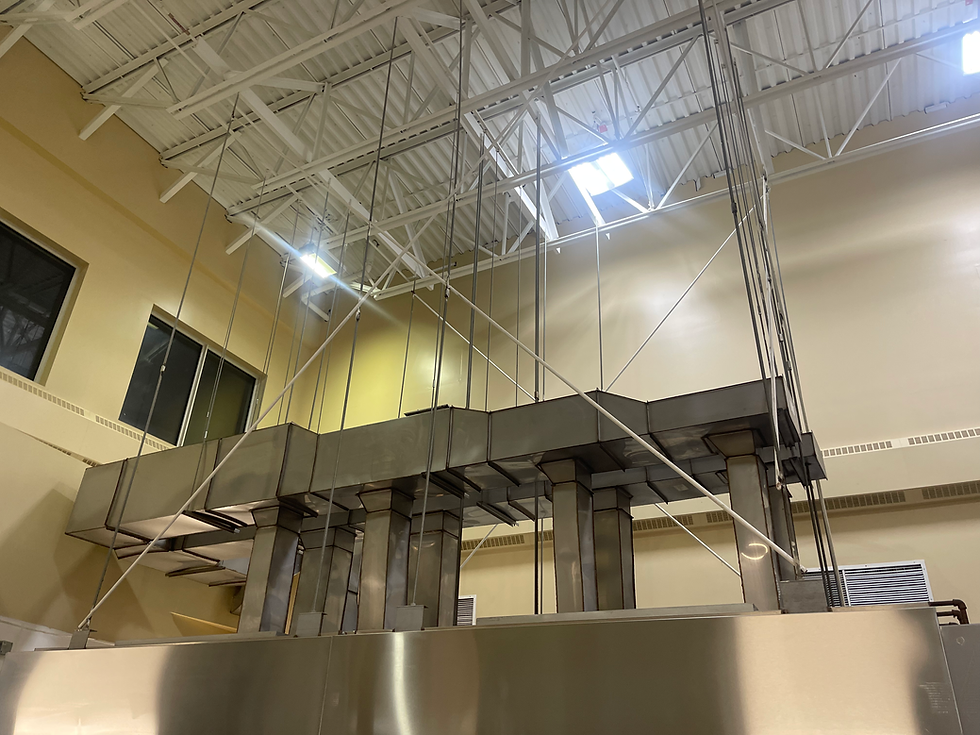
One of the biggest misconceptions among commercial landlords is that the kitchen exhaust system exists only inside the leased restaurant.
It doesn't.
A commercial kitchen exhaust system often extends through multiple parts of the building, including:
Ceiling cavities
Vertical shafts
Fire-rated enclosures
Roof penetrations
Rooftop fan assemblies
Structural supports
Exterior weather protection
These components may interact with building systems that affect more than one tenant.
When maintenance is required, access frequently involves both the restaurant operator and the property owner.
That is why coordination matters just as much as cleaning itself.

Lease Language Isn't Always as Clear as Owners Think
Commercial leases often allocate maintenance responsibilities between landlord and tenant, but not every lease addresses kitchen exhaust systems with the same level of detail.
Some agreements clearly assign responsibilities for:
Exhaust cleaning
Fire suppression maintenance
Rooftop fan servicing
Grease containment
Duct access
Inspection documentation
Others rely on broad maintenance clauses that may leave room for interpretation.
Rather than assuming responsibilities are obvious, landlords should periodically review lease provisions with qualified legal professionals when drafting or renewing agreements, particularly where specialized commercial kitchen systems are involved.
Doing so can help align expectations between property owners and restaurant tenants.
Rooftop Equipment Is Often "Out of Sight, Out of Mind"
Property managers regularly inspect parking lots, landscaping, lighting, and HVAC systems.
Rooftop exhaust equipment, however, may receive less frequent attention simply because it is less visible.
Yet rooftop exhaust fans operate daily.
Routine inspections may help identify:
Loose access panels
Weather-related wear
Corrosion in coastal environments
Grease accumulation around fan bases
Damaged fan hinges
Roof protection issues
Contractor access concerns
For Halifax properties located near the harbour or exposed to Atlantic weather, periodic rooftop reviews can become an important part of preventive maintenance.
Shared Building Systems Mean Shared Operational Risk
One restaurant tenant rarely operates in complete isolation within a commercial plaza or mixed-use property. While the kitchen itself belongs to the tenant, several supporting systems often interact with the building's common infrastructure.
Examples include:
Roof structures supporting exhaust fans
Shared electrical services
Mechanical penetrations through fire-rated assemblies
Rooftop access routes
Utility corridors
Building maintenance schedules
Contractor access procedures
This is why commercial property managers benefit from understanding how kitchen exhaust maintenance fits into the property's overall preventive maintenance strategy.
Rather than viewing exhaust cleaning as "the restaurant's problem," experienced property managers recognize it as one component of broader building stewardship.
Coordination Between Landlord and Tenant Prevents Small Problems from Becoming Larger Ones
Commercial kitchens operate on demanding schedules.
Restaurant managers focus on:
Staffing
Inventory
Food preparation
Customer service
Equipment uptime
Property managers focus on:
Building systems
Roof maintenance
Common areas
Tenant relations
Preventive maintenance
Contractor scheduling
Kitchen exhaust maintenance sits directly between these two operational worlds.
Without communication, common situations can arise:
Cleaning contractors arrive without roof access.
Rooftop work conflicts with roofing contractors.
Fan maintenance is delayed because access keys are unavailable.
Service reports never reach the property manager.
Roof penetrations remain uninspected after maintenance.
These issues are rarely caused by negligence. More often, they result from disconnected maintenance processes.
Establishing clear communication channels between tenants, landlords, and qualified contractors helps keep maintenance predictable and organized.
Documentation Matters for More Than the Restaurant
Restaurant operators often keep service reports for inspection purposes.
Property owners may also benefit from maintaining records that relate to shared building systems.
Examples include:
Contractor access logs
Roof access documentation
Maintenance schedules
Inspection reports
Service recommendations
Equipment repair records
Fan replacement documentation
Roof condition observations after servicing
These records can help property managers track building maintenance over time and support long-term asset management.
As discussed in our article "The Hidden Cost of a Denied Insurance Claim," documentation often proves valuable long after the maintenance visit.
Coastal Atlantic Canada Adds Another Layer of Maintenance Planning
Commercial properties throughout Halifax and many Atlantic Canadian communities operate in an environment unlike much of inland Canada.
Factors include:
Salt-laden coastal air
High humidity
Frequent storms
Freeze-thaw cycles
Strong seasonal winds
Heavy rainfall
Winter snow accumulation
These environmental conditions can influence rooftop mechanical equipment over time.
For kitchen exhaust systems, landlords should consider periodic inspections of:
Fan housings
Hinges
Fasteners
Weatherproof seals
Roof curbs
Flashings
Corrosion protection
Access pathways
Routine observations help identify maintenance needs before they become larger repair projects.
Selecting Qualified Commercial Kitchen Contractors Benefits Everyone
Property managers are not expected to become kitchen exhaust experts.
Instead, their role often involves ensuring that qualified contractors have appropriate access to perform scheduled maintenance safely and efficiently.
When reviewing service providers, landlords and property managers may wish to ask whether contractors:
Specialize in commercial kitchen exhaust systems
Understand restaurant operating schedules
Provide detailed service reports
Photograph completed work
Coordinate with building management
Follow recognized industry practices
Carry appropriate commercial insurance
Choosing experienced contractors supports smoother maintenance planning for both landlords and tenants.
A Preventive Maintenance Calendar Reduces Last-Minute Scheduling
Commercial property management is easier when maintenance is predictable.
Rather than waiting for:
Inspection notices
Tenant complaints
Equipment failures
Roof leaks
Fan problems
many property managers coordinate recurring maintenance calendars with restaurant tenants.
A coordinated calendar can include:
Maintenance Activity | Responsibility | Suggested Coordination |
Kitchen exhaust cleaning | Restaurant tenant | Notify landlord before roof access |
Rooftop fan inspection | Contractor | Coordinate with building management |
Roof condition review | Property manager | After rooftop service visits |
Fire suppression inspection | Restaurant contractor | Maintain shared documentation if appropriate |
Roof membrane inspection | Building contractor | Review penetrations around exhaust equipment |
The exact responsibilities depend on the lease agreement and building configuration, but coordination benefits everyone involved.
Multi-Tenant Buildings Require Better Communication, Not More Complexity
Restaurants are dynamic businesses.
Commercial properties are long-term assets.
When landlords and tenants communicate effectively about maintenance responsibilities, scheduling, documentation, and contractor access, routine exhaust servicing becomes another predictable component of professional property management.
Problems often arise not because maintenance is difficult—but because expectations were never clearly established.
Successful commercial landlords create systems that support:
Clear communication
Documented maintenance
Planned contractor access
Preventive inspections
Organized recordkeeping
Long-term asset protection
These practices help reduce operational friction while supporting both tenant success and property performance.
Compliant vs. Reactive Property Management
Proactive Property Management | Reactive Property Management |
Coordinates maintenance schedules | Waits for tenant complaints |
Reviews lease maintenance responsibilities | Assumes responsibilities are understood |
Maintains organized records | Documentation scattered across contractors |
Plans rooftop access | Access arranged at the last minute |
Communicates with tenants regularly | Communication occurs only when problems arise |
Reviews contractor recommendations | Repairs postponed until failures occur |
Supports preventive maintenance | Responds primarily to emergencies |
This comparison illustrates management approaches rather than legal obligations. Individual lease agreements determine specific responsibilities.
Commercial Property Manager's Kitchen Exhaust Compliance Checklist
Managing a multi-tenant commercial property requires balancing tenant needs, building maintenance, and long-term asset protection. While restaurant tenants are typically responsible for operating and maintaining their kitchen equipment, landlords can benefit from having a structured oversight process for shared infrastructure and building-related responsibilities.
Use this checklist as part of your preventive maintenance program.
Monthly
Review any scheduled kitchen exhaust maintenance with restaurant tenants.
Confirm rooftop access procedures are clear and documented.
Inspect rooftop areas visually (where safe and appropriate) for obvious issues such as debris or damaged equipment housings.
Verify that contractor contact information is current.
Quarterly
Request copies of kitchen exhaust cleaning or inspection reports when lease provisions require them.
Review recommendations from qualified contractors that may affect shared building systems.
Inspect roof penetrations around exhaust systems for signs of weather-related wear.
Ensure service documentation is organized and accessible.
Annually
Review commercial lease language related to kitchen exhaust responsibilities.
Meet with restaurant tenants to discuss maintenance schedules for the upcoming year.
Assess whether rooftop equipment installations remain compatible with building maintenance plans.
Coordinate preventive maintenance between roofing contractors, HVAC providers, and kitchen exhaust specialists where appropriate.
A structured maintenance program helps reduce confusion, improve communication, and support long-term building performance.
Best Practices for Commercial Landlords with Restaurant Tenants
Experienced commercial property owners often treat restaurant spaces differently from standard retail units because of their specialized mechanical systems.
Consider adopting these best practices:
Clearly Define Responsibilities
Ensure lease agreements clearly outline maintenance responsibilities for:
Kitchen exhaust cleaning
Fire suppression systems
Rooftop fan access
Roof penetrations
Shared building infrastructure
Contractor coordination
Legal professionals should always review lease language to ensure it aligns with applicable laws and the property's specific configuration.
Maintain Open Communication
Regular communication between landlords, property managers, and restaurant operators helps avoid scheduling conflicts and supports smoother maintenance planning.
Topics worth discussing include:
Upcoming exhaust cleaning dates
Roof access requirements
Equipment upgrades
Building renovations
Contractor scheduling
Planned inspections
Protect Shared Building Assets
Restaurant exhaust systems may interact with:
Roof membranes
Structural supports
Weatherproofing systems
Common mechanical areas
Coordinating maintenance helps protect these shared assets while minimizing disruption to tenants.
Work with Qualified Commercial Contractors
Kitchen exhaust systems are specialized mechanical installations.
Whenever maintenance is required, property managers should consider working with contractors who regularly service commercial food-service facilities and understand industry-recognized cleaning and inspection practices.
Frequently Asked Questions
1. Are commercial landlords responsible for cleaning restaurant kitchen exhaust systems?
Responsibilities depend on the lease agreement and building ownership structure. Restaurant tenants commonly manage routine kitchen operations, while landlords may retain responsibilities for certain building systems or shared infrastructure. Lease terms should always be reviewed carefully.
2. Should property managers keep copies of kitchen exhaust maintenance records?
If lease agreements require documentation or if maintenance affects shared building systems, retaining organized records can support long-term property management and maintenance planning.
3. Why should landlords coordinate rooftop access for exhaust maintenance?
Many commercial kitchen exhaust systems include rooftop components. Coordinating access helps contractors perform maintenance efficiently while protecting roof systems and minimizing disruption to other building operations.
4. How can landlords reduce maintenance-related disputes with restaurant tenants?
Clearly written lease agreements, documented maintenance procedures, regular communication, and proactive scheduling help establish expectations and reduce misunderstandings between landlords and tenants.
Safety Summary
Commercial kitchens introduce specialized mechanical systems into multi-tenant properties. While restaurant operators are generally responsible for their day-to-day kitchen operations, landlords also play an important role in supporting effective building management through clear communication, coordinated maintenance, and oversight of shared infrastructure.
A proactive approach includes:
Reviewing lease responsibilities
Coordinating maintenance schedules
Protecting rooftop building assets
Maintaining organized documentation
Supporting qualified contractor access
Planning preventive maintenance instead of reacting to emergencies
These practices contribute to smoother property operations and stronger relationships between landlords, tenants, and service providers.
Protect Your Property Before Small Maintenance Issues Become Bigger Problems
Commercial buildings with restaurant tenants require a coordinated approach to kitchen exhaust maintenance. Clear communication, reliable documentation, and experienced service providers help property owners manage shared infrastructure more effectively while supporting tenant operations.
If you manage a shopping centre, office complex, mixed-use development, or multi-tenant commercial property in Halifax, Dartmouth, Bedford, Sackville, Truro, Sydney, Moncton, Saint John, Charlottetown, or anywhere across Atlantic Canada, Night Vision Clean provides professional commercial kitchen exhaust cleaning, inspection support, and maintenance services tailored to food-service facilities.
📋 Schedule a Property Compliance Review
Gain confidence that your restaurant tenants' kitchen exhaust systems are being professionally maintained while helping protect your building's long-term performance.



Comments