
Beyond the Hood: 5 Often-Overlooked Kitchen Areas That Can Fail a Health and Safety Inspection

When food service operators prepare for a provincial health safety audit, their attention naturally hits visible touchpoints. Teams log hours scrubbing stainless steel prep surfaces, chemical-washing cooking lines, and ensuring line refrigeration metrics satisfy local health department rules. However, regional public health inspectors across Nova Scotia, New Brunswick, and Prince Edward Island are trained to look past surface aesthetics. They focus heavily on deep structural systems that directly impact structural hygiene, cross-contamination risks, and public wastewater networks.
Surprise municipal audits evaluate critical infrastructure points that fall outside daily cleaning routines. Neglecting these areas introduces serious operational vulnerabilities that can cause unexpected points deductions, financial fines, or immediate facility shutdown orders.
This technical operational guide walks through five hidden kitchen zones that require regular third-party maintenance, detailing the underlying sanitation science and explaining how to protect your property from sudden regulatory enforcement actions.

1. The Grease Interceptor: Managing Wastewater Chemistry
The most common structural audit vulnerability in commercial food service properties involves the grease interceptor, or grease trap. Designed to separate heavy animal lipids, vegetable oils, and dense food solids from high-volume kitchen waste lines, these units protect public sewer networks from blockages.
Grease interceptors operate on basic buoyancy physics. Because cooking fats are lighter than water, they rise to the top of the interceptor chamber, trapping clean wastewater underneath to drain out into municipal lines. However, these collection systems have a finite retention volume.
When cleaning grease traps or interceptor lines is neglected, several systemic problems occur:
Chamber Saturation: The accumulated layer of fats solidifies at the top of the chamber, reducing the unit's operational volume and forcing newly drained oils directly into municipal sewers.
Sewer Line Blockages: Once grease enters your property's plumbing drains, it cools, hardens, and catches moving debris, causing structural line blockages and sewage backups.
Wastewater Backflow: A blocked drain line can push rancid grease and blackwater back up through your floor drains and into commercial pot-washing sinks.
A sewage backup into active food prep zones presents an immediate bio-hazard that requires a voluntary or mandatory shutdown of kitchen operations. Furthermore, municipal utilities can issue substantial fines if a business is found violating local industrial wastewater bylaws.
2. Overhead Structures: The Cross-Contamination Risk of Ceiling Tiles
While grease trap management handles sub-floor sanitation, kitchen managers must also evaluate overhead ceiling tile networks. Baffle filters inside primary exhaust hoods trap a significant percentage of airborne oils, but fine grease vapors and steam slip past during high-volume service windows.
This vapor rises naturally, condensing as a sticky, translucent film across surrounding ceiling tiles and support grids. Over months of exposure to high humidity, this oil film undergoes structural degradation:
Fungal Accumulation: The combination of sticky organic oils and consistent moisture creates an ideal breeding ground for hidden mold spores and bacterial colonies.
Structural Breakdown: Ongoing moisture absorption breaks down standard ceiling tile fibers, causing them to bow, warp, and crumble.
Flaking Hazards: Vibration from rooftop extraction equipment can cause pieces of degraded ceiling material, collected dust, or mold spores to break loose, creating a risk of contamination over open cooking equipment.
Public health auditors check overhead spaces above active food zones carefully. Discovering mold, peeling paint, or deteriorating materials above prep tables will result in immediate points deductions and require professional remediation.
3. Carbon Layer Volatilization: Descaling Heavy Cooking Appliances
Cooking appliances naturally develop a thick, dark crust of carbonized fat along side walls, burner ports, and caster assemblies. Many facilities treat this buildup as a cosmetic issue, but it presents a distinct hazard to food safety and facility operation.
Hardened carbon layers act as a thermal insulator, reducing heat transfer efficiency and forcing appliances to consume higher fuel volumes while resulting in uneven cooking performance. More critically, these porous carbonized layers act like a sponge, absorbing fresh grease during high-volume shifts.
When exposed to open flames or ambient radiant heat, these saturated carbon layers can ignite, causing appliance fires that can damage key components. Regular mechanical descaling down to bare metal surfaces is required to remove this fuel hazard and maintain proper appliance sanitation.
4. Hood Grease Channels: Stopping Oil Runoff at the Source
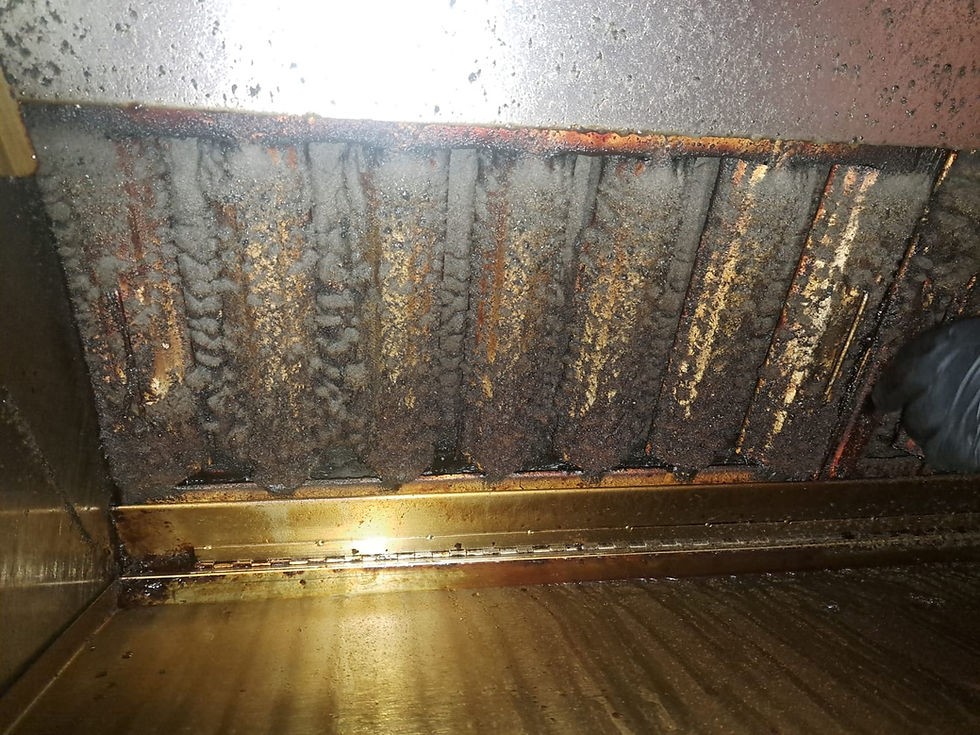
Exhaust hoods feature integrated collection troughs engineered to direct condensed oils away from the main hood throat and into removable grease cups. If these collection tracks are not regularly cleared during your standard maintenance cycles, the channel quickly overflows.
Trapped grease sitting in open hood channels undergoes rapid chemical oxidation when exposed to continuous ambient heat, generating a strong sour smell that can impact your kitchen's environment. More importantly, overflowing oil can drip back down onto active cooking surfaces and into open pans, presenting a serious cross-contamination hazard that carries high penalties during health audits.
5. Behind the Line: Eliminating Hidden Bio-Contamination Zones
The fifth critical audit point focuses on the tight spaces located behind heavy, line-mounted appliances like deep fryers, charbroilers, and convection ovens. Because these structural gaps are out of daily sight, they are frequently skipped during nightly kitchen cleanups.
These narrow voids trap loose food particles, aerosolized grease, and ambient dust, forming a thick residue over time. This hidden accumulation creates an ideal food source for nocturnal pests, such as rodents and insects. Public health inspectors routinely use high-intensity flashlights to check behind heavy machinery lines, and finding evidence of pest activity or unaddressed residue can lead to immediate operational restrictions.
Establishing Preventative Security with Professional Detail Services
Relying on internal kitchen staff to manage deep structural sanitization often produces inconsistent results, as teams lack the specialized high-pressure equipment and industrial degreasers required to fully clear hidden spaces.
Night Vision Clean provides detailed commercial detail cleaning packages designed to fully target these high-risk inspection failure points across Atlantic Canada. Our mobile service teams deploy specialized tools, automated pumping equipment, and eco-friendly grease liquefaction compounds to completely flush, clean, and reset commercial grease interceptors in compliance with regional wastewater bylaws.
Integrating your deep building care with our systemic fire prevention protocols and keeping verifiable compliance reporting logs ensures that your property remains safe, efficient, and fully prepared for any provincial inspection.
Frequently Asked Questions
What happens if a restaurant grease trap overflows?
When a grease trap overflows, solidified animal fats and oils back up into the facility's drainage plumbing or bypass the unit into municipal sewer lines. This causes immediate drain blockages, potential wastewater backflows into warewashing areas, property damage, and severe municipal fines.
How do health inspectors evaluate commercial kitchen ceiling tiles?
Health inspectors look for accumulated grease films, evidence of water damage, bowing, cracking, or active mold growth on overhead tiles. Any deteriorating material located above an active food preparation line is classified as a critical cross-contamination risk.
Can a commercial kitchen fail an inspection due to buildup behind appliances?
Yes. Buildup behind heavy cooking lines creates serious sanitation issues and acts as a primary food source for pests. Inspectors regularly audit these areas, and discovering heavy grease accumulations or pest activity can lead to point deductions or immediate closure orders.
Do not wait for a surprise municipal audit to discover hidden sanitation liabilities inside your facility. Contact the professional team at Night Vision Clean today to bring your entire building infrastructure up to pristine health inspection standards.


Comments